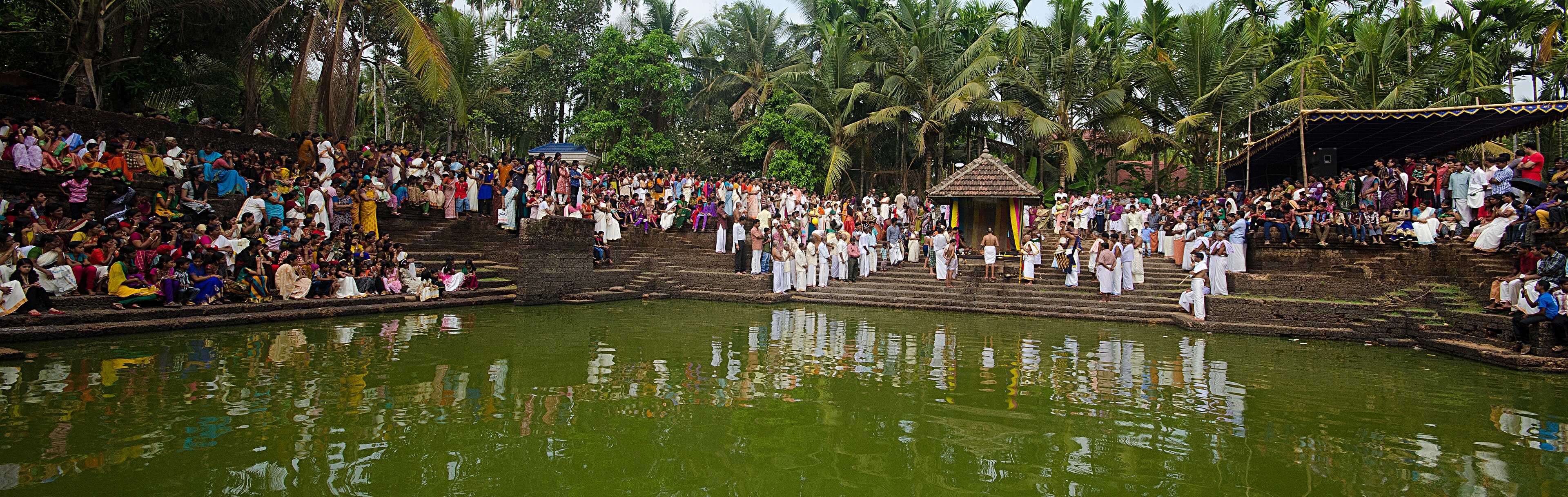
Hindu civilisation is not threatened only from outside. There is a quieter threat, more difficult to name because it wears the costume of strength — the slow drift of Hindu identity toward something generic, tradition-free, and stripped of the specific roots that gave it substance. A Hindu identity proud of being Hindu in the abstract but increasingly uncomfortable with the living, rooted, community-specific traditions that make Hinduism what it actually is.
This essay is not a criticism of Hindu pride. It is a criticism of a particular kind of Hindu pride — one that, in its effort to unite all Hindus under a single banner, risks hollowing out the very inheritance it claims to protect. The concern can be stated simply: Hindu uniformity is not Hindu unity. And confusing the two may be the most consequential mistake the Hindu civilisational project is making today.
The Ambedkarite Drift
There is a troubling irony at the heart of contemporary Hindu cultural politics. The same forces that most loudly champion Hindu civilisation have quietly absorbed a framework for thinking about Hindu tradition that originated with Hindu civilisation's most systematic internal critic.
Ambedkar's critique of Hinduism was, at its core, a critique of its hierarchical social structures — and specifically of Brahminical traditions, texts, and practices as the source and sustaining force of caste oppression. Whatever one thinks of the accuracy of that critique — and there are serious reasons to think it was significantly shaped by colonial distortions — its political legacy is clear: it positioned Brahminical traditions as the villain of the Hindu story, something to be overcome, reformed away, or abandoned in the name of social justice.
What is striking is that a version of this framing has quietly entered the contemporary Hindu cultural project. In the effort to build a broad Hindu coalition that includes OBC communities, Dalit communities, and tribal communities — a legitimate and important social goal — there is an increasing tendency to distance the project from specific Hindu traditions that might be perceived as casteist, elitist, or associated with upper-caste privilege. Brahminical practices, Vedic rituals, Sanskrit learning, the specific devotional and philosophical traditions associated with particular communities — these are sometimes treated as liabilities for Hindu unity rather than as assets.
"The result is a Hinduism that says: I am Hindu, I am proud — but I have no specific traditions to defend, no particular practices to uphold, no community-specific inheritance to celebrate."
The result is a Hinduism that says, in effect: I am a Hindu. I am proud of being Hindu. But I have no specific traditions to defend, no particular practices to uphold, no community-specific inheritance to celebrate — because all of that is divisive, all of that is casteist, all of that is an obstacle to the broad, casteless Hindu unity we are building.
This is not Hindu pride. It is Hindu emptiness wearing the costume of Hindu pride.
The Beauty That Is Being Surrendered
Hinduism is not a religion in the Abrahamic sense — a single founder, a single scripture, a single creed, a single mode of worship that all adherents share. It is a civilisation — vast, plural, internally diverse to a degree that has no parallel in the religious world. Its texts are not one book but thousands. Its deities number in the tens of millions, each specific to a region, a community, a family. Its philosophical schools range from Shankara's pure non-dualism to Madhva's fierce dualism. Its devotional traditions include the austere Shaiva Siddhanta of Tamil Nadu, the ecstatic Vaishnavism of Bengal, the Tantric traditions of Kashmir and Assam, the Smartha traditions of the Deccan, the Lingayat traditions of Karnataka.
And yes — its Brahminical traditions. The Vedic learning. The Sanskrit scholarship. The ritual traditions maintained across generations by priestly communities. The philosophical lineages that produced Shankara, Ramanuja, Madhva, and the entire architecture of Indian philosophical thought. These are not the villains of the Hindu story. They are among its greatest treasures — the custodians of a knowledge tradition of extraordinary depth and antiquity that has no parallel anywhere in the world.
To distance Hindu cultural identity from Brahminical traditions in the name of social inclusivity is not a correction of Hinduism's historical errors. It is the adoption of the colonial and missionary framing that identified those traditions as Hinduism's original sin. It is surrendering the argument to those who constructed it — accepting the premise that the Brahminical inheritance is a liability rather than an asset, and then trying to build Hindu pride on what remains after that inheritance has been quietly set aside.
What remains, after you remove the specific traditions — Brahminical, regional, community-specific, caste-associated — is a generic Hindu identity that has warmth but no texture, pride but no depth, unity but no roots. An identity that can fill a stadium for a rally but cannot fill a temple with the living presence of a tradition that knows what it is, where it came from, and what it is for.
Unity Without Uniformity
The mistake at the heart of this tendency is the confusion of unity with uniformity. These are not the same thing. They are, in fact, opposites.
Hindu unity, properly understood, is not the unity of a single creed, a single practice, a single social identity smoothed of all specific texture. It is the unity of a civilisation vast enough to contain multitudes — a civilisation where the Brahmin priest and the tribal practitioner, the Shaiva and the Vaishnava, the adherent of the Vedic ritual tradition and the devotee of a local village goddess, all recognise themselves as part of the same great inheritance without any of them being required to apologise for or abandon their specific tradition in the name of the collective.
This is not a utopian vision. It is a description of what Hindu civilisation actually was at its best — and what made it resilient enough to survive invasions, colonial dismemberment, and sustained ideological attack over centuries. It survived not because it achieved uniformity but because its diversity gave it the flexibility that uniform traditions lack. When one tradition was suppressed, others flourished. When one region was disrupted, others maintained the inheritance. The plurality was the survival mechanism.
"Hindu civilisation survived not because it achieved uniformity but because its diversity gave it the flexibility that uniform traditions lack. The plurality was the survival mechanism."
A Hindu cultural project that draws on this strength — that says to every community: your specific tradition is valid, your specific practices are Hindu, your specific inheritance is part of what we are defending — is one that can genuinely unify. It unifies not by asking communities to surrender their particularity but by showing them that their particularity is already part of something larger.
A Hindu cultural project that says instead: your tradition is divisive, your practice is associated with caste hierarchy, your specificity is an obstacle to the broad Hindu coalition we are building — does the work of Hindu civilisation's enemies for them. It produces exactly the kind of deracinated, rootless Hindu identity that colonial missionaries dreamed of — a Hindu who has abandoned the specific traditions that gave Hinduism its substance, left with a vague civilisational pride that has nothing specific to stand on.
In Defence of All Specific Traditions
Let me be direct about what this essay is defending — because it is worth stating plainly.
It is defending the Brahminical traditions — the Vedic learning, the Sanskrit scholarship, the ritual lineages, the philosophical schools — as genuine Hindu treasures that deserve celebration, not apology.
It is defending the regional traditions — the specific devotional forms, the community practices, the local deities and their specific forms of worship — as irreplaceable threads in the fabric of Hindu civilisation.
It is defending the community-specific traditions — including those associated with particular castes or jatis — as living inheritances that deserve to be understood in their complexity rather than dismissed as casteist hangovers.
The distinction that matters is between caste-based discrimination — which is a genuine moral wrong that Hindu tradition itself has the philosophical resources to address — and community-specific traditions, which are a source of cultural richness and civilisational depth. These two things are not the same. Conflating them — treating every community-specific practice as evidence of casteism, treating every tradition associated with a particular community as a liability for Hindu unity — is an error that serves no one except those who want Hindu civilisation to be stripped of its substance.
The Garden and Its Variety
The Hindu civilisation is a garden of extraordinary variety. Its beauty is not despite its diversity but because of it. Its resilience across millennia was not achieved by becoming simpler, more uniform, more manageable — it was achieved by remaining gloriously, stubbornly, irreducibly plural.
The gardener who loves this garden does not uproot its variety to plant a single species more efficiently — even if that single species is hardier, easier to grow, and more politically convenient. A monoculture is easier to manage. It is also more fragile, more vulnerable to a single disease, more dependent on continuous external maintenance to survive. The diversity it replaced was its own protection.
Hindu unity built on the erasure of specific traditions is not unity. It is a monoculture — easier to mobilise, perhaps, but no longer what it claims to protect. The traditions being quietly set aside in the name of a broader coalition are not obstacles to Hindu strength. They are the substance of it.
Hindu unity is worth fighting for. Hindu diversity is worth fighting for just as hard. They are not opposites. The second is the foundation of the first.
To love Hindu civilisation is to love its specific, rooted, irreducibly plural reality — not just the idea of it. The garden's beauty lies in its variety. Tend every plant in its specificity, or you are no longer tending the garden.
