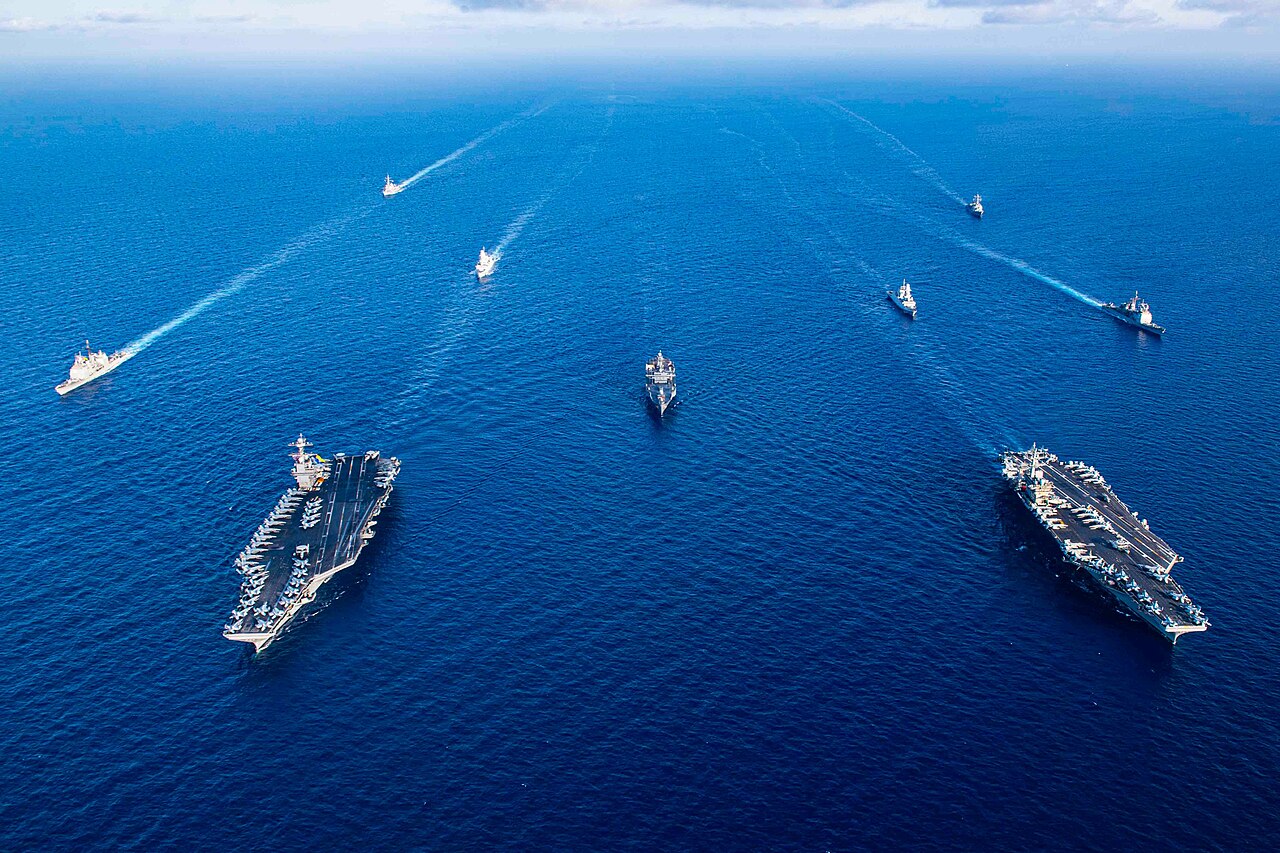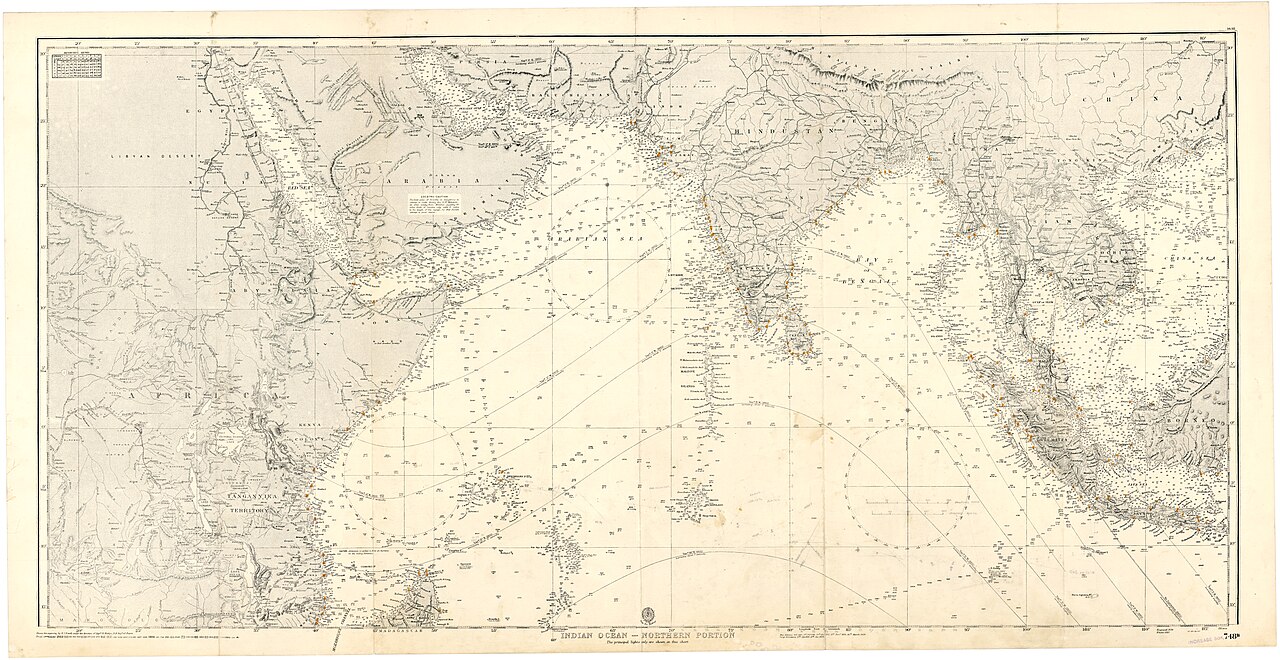
The Indian Ocean is not merely a body of water. It is a civilisational artery — the passage through which spices once moved from Calicut to Lisbon, through which oil now moves from the Persian Gulf to Shanghai, and through which the ambitions of great powers today move with increasing urgency. More than half the world’s container traffic passes through its waters. Two thirds of the world’s oil shipments traverse its sea lanes. The Strait of Hormuz, the Strait of Malacca, and the Mozambique Channel are not geographical curiosities; they are the choke points upon which the modern global economy depends. And at the centre of all this — geographically, historically, strategically — sits India.
The question is no longer whether the Indian Ocean will become a theatre of great power competition. It already is. The question that confronts New Delhi, and that the architects of Indian grand strategy must answer with clarity, is this: when the contest sharpens, when the alliances harden, and when the moment of reckoning arrives — who will stand with India?
The answer, upon honest examination, is uncomfortable. India may find herself navigating the most consequential geopolitical moment in her modern history largely alone.
The Dragon’s Arc
China’s strategic project in the Indian Ocean is neither secret nor subtle. For more than two decades, Beijing has been constructing what analysts have called the String of Pearls — a chain of port facilities, logistics hubs, and military-use installations that arcs from the South China Sea through the Strait of Malacca, across the Bay of Bengal and the Arabian Sea, around the Horn of Africa and down the East African coast. Hambantota in Sri Lanka. Gwadar in Pakistan. Djibouti on the Horn of Africa. Chittagong in Bangladesh. The Maldives, where Chinese influence has waxed and waned with each election but the infrastructure investments remain. The pattern is unmistakable.
China does not present these investments as military installations, and strictly speaking, most of them are not — at least not yet. They are commercial ventures, Belt and Road projects, expressions of South-South solidarity. But a port that can refuel a commercial vessel can refuel a warship. A logistics facility that can store containers can store munitions. The dual-use potential of every Chinese port in the Indian Ocean littoral is understood in every naval headquarters from New Delhi to Washington to Canberra.
China’s strategy is patient, layered, and deeply geographic. It does not need to win a battle in the Indian Ocean. It only needs to ensure that India can never feel safe in it.
The Himalayan dimension compounds the maritime one. The 2020 Galwan Valley clash — in which soldiers died on both sides for the first time in decades — was not an aberration. It was a signal. China had been incrementally occupying and fortifying territory along the Line of Actual Control for years before the violence erupted. The pattern since has been one of Chinese consolidation: constructing villages, building roads, establishing permanent infrastructure in areas that India considers its own. The land border and the sea lanes are not separate contests. They are two faces of the same strategic pressure.
India responded to Galwan with economic measures — banning Chinese apps, scrutinising Chinese investment, cooling cultural and people-to-people ties. These are asymmetric responses to a military provocation, and they reveal the fundamental disproportion in the two nations’ power. China has a GDP approximately five times India’s size. Its defence budget is roughly four times larger. Its naval construction programme is the most ambitious in the world. India is not defenceless, but the correlation of forces is not favourable, and it is worsening on most indicators.
What makes China’s arc in the Indian Ocean particularly consequential is not just its scale but its permanence. Commercial loans become leverage. Ports become dependencies. Dependencies become influence. And influence, in the fullness of time, becomes control. India’s neighbourhood is being reshaped, systematically and patiently, in ways that constrain India’s strategic options before any shot is fired.
The Wound to the West
Pakistan presents India with a different kind of problem — not the patient, civilisational ambition of a rising power, but the chronic, destabilising hostility of a failing state armed with nuclear weapons. The distinction matters. China is a threat that demands strategic foresight and long-term positioning. Pakistan is a wound that bleeds continuously, consuming Indian attention, resources, and political bandwidth that might otherwise be directed elsewhere.
The Pakistani state’s relationship with jihadist militancy is one of the most consequential and least discussed strategic facts of the twenty-first century. It is not a bug in Pakistan’s security architecture; it is a feature. The Inter-Services Intelligence has, for decades, used non-state armed groups as instruments of state policy — bleeding India through proxy violence in Kashmir, maintaining strategic depth in Afghanistan, and calibrating the level of cross-border violence to remain below the threshold that might trigger a conventional military response. Mumbai in 2008 was not the work of rogue elements. The Pulwama attack of 2019 was not an aberration. They were the outputs of a system operating largely as designed.
India’s strategic options against Pakistan have always been constrained by the nuclear factor. A state that possesses nuclear weapons and has signalled its willingness to use them faces a drastically different calculus of coercion than a conventional adversary. New Delhi cannot simply destroy the infrastructure of Pakistani militancy through sustained military campaigns without risking escalation that no rational actor wishes to contemplate. This is the genius — if one can call it that — of Pakistan’s nuclear posture: it provides a shield behind which sub-conventional aggression can continue indefinitely.
What has changed in recent years is the degree to which Pakistan’s internal dysfunction has accelerated. The economy has lurched from IMF bailout to IMF bailout. The civilian-military compact that governed Pakistan since independence has frayed visibly. A Pakistan in managed decline is not a less dangerous neighbour; it is a more unpredictable one.
A nuclear-armed state in internal crisis, with a security establishment that has historically conflated its institutional interests with the project of bleeding India, is not a problem that diplomacy alone can resolve.
The China-Pakistan Economic Corridor — CPEC — has further complicated this picture. What began as an infrastructure investment initiative has become a structural linkage between India’s two most significant adversaries. The Gwadar port, at the mouth of the Arabian Sea, is both a Chinese commercial investment and a potential naval facility within striking distance of India’s western approaches. The highway connecting Xinjiang to Gwadar runs through Gilgit-Baltistan — territory that India claims as its own. This is not incidental geography. It is deliberate architecture.
The Unreliable Patron
If China represents the threat and Pakistan the chronic wound, the United States represents something more ambiguous and, in some ways, more troubling: an ally that is not quite an ally, a partner whose partnership comes with conditions, and a power whose commitment to the Indo-Pacific has proven subject to the volatility of its domestic politics in ways that India cannot afford to ignore.
The relationship between India and the United States has deepened considerably since the early 2000s. The Indo-US nuclear deal of 2008 was a transformative moment, signalling that Washington had decided to treat India as a strategic partner rather than a non-proliferation problem. The subsequent years saw the growth of defence cooperation, intelligence sharing, joint exercises, and the formalisation of the QUAD — the security grouping of India, the United States, Japan, and Australia that has become the primary institutional expression of Indo-Pacific alignment.
And yet India has never joined a formal alliance with Washington, and there are good reasons why it has not. The Non-Aligned Movement may be a historical relic, but the strategic instinct it reflected — that India’s interests are not always congruent with those of any great power, including the United States — remains sound. India has purchased Russian military equipment for decades and continues to do so. India abstained on United Nations resolutions condemning the Russian invasion of Ukraine. India maintains economic and diplomatic engagement with Iran. These are not oversights or failures of moral imagination. They are deliberate expressions of strategic autonomy.
But strategic autonomy has its costs, and the cost reveals itself most clearly in moments of crisis. When China occupied the Galwan Valley, the American response was sympathetic but not material. When Pakistan-sponsored militants struck Indian soil, Washington urged restraint on both sides with an evenhandedness that, from New Delhi’s perspective, bordered on moral equivalence. The United States has its own relationships with Pakistan — forged through decades of Cold War alignment, the Soviet-Afghan war, and post-2001 counter-terrorism cooperation — that make Washington structurally incapable of treating India’s security concerns with the unambiguous solidarity that a genuine ally would provide.
The deeper problem is structural and domestic. American foreign policy since the end of the Cold War has oscillated between engagement and withdrawal, between multilateralism and unilateralism, in cycles increasingly driven by the four-year rhythm of presidential elections. The first Trump administration signalled a retreat from the liberal international order. The Biden administration attempted a restoration. The return of Trump in 2025 has introduced fresh uncertainty about American commitments in the Indo-Pacific and about the durability of the QUAD itself. Japan and Australia have their own calculations. The group that India has bet a portion of its strategic future on may prove less cohesive than its architects hoped.
India’s experience with American partnership has taught a lesson that strategic realists have always understood: great powers do not have permanent friends. They have permanent interests. And American interests in the Indian Ocean, while overlapping with India’s, are not identical to them.
The Loneliness of the Middle
India occupies a peculiar position in the architecture of contemporary geopolitics. She is too large to be a client state, too independent to be an unconditional ally, and too consequential to be ignored. She bridges civilisations — ancient ties with West Asia, with Southeast Asia, with East Africa, with the Persian Gulf. She is simultaneously a democracy and a civilisational state, a rising power and a post-colonial nation navigating the legacies of subjugation. This complexity, which is India’s greatest cultural richness, is also her deepest strategic challenge.
The nations of the Indian Ocean littoral — Sri Lanka, the Maldives, Bangladesh, Myanmar, the Gulf states — each have their own calculations, their own dependencies, their own vulnerabilities to Chinese economic leverage. India has repeatedly found that what it considers its natural sphere of influence is contested terrain. Sri Lanka chose Chinese financing for Hambantota and then found itself unable to repay the debt. The Maldives has swung between pro-India and pro-China governments with alarming regularity. Bangladesh maintains careful equidistance. Nepal, which shares a land border with both India and China, has allowed the construction of Chinese connectivity infrastructure that alters the strategic geography of the Himalayas.
India has responded to this erosion of regional primacy with a Neighbourhood First policy — increased connectivity investments, lines of credit, humanitarian assistance, diplomatic engagement. But India cannot match China’s financial resources, and it cannot always match China’s willingness to engage with governments whose democratic credentials are questionable. The result is that India finds itself in a strategic no-man’s land: too strong to be simply dominated, too stretched to dominate others, and without the unconditional backing of any great power.
No True Friends
The conclusion that emerges from this survey is one that Indian strategic thinkers have long understood but that Indian politicians have rarely stated plainly: India has no true friends in the international system. This is not a counsel of despair. It is a counsel of realism.
Lord Palmerston’s aphorism — that nations have no permanent friends, only permanent interests — is not a cynical dismissal of international cooperation. It is a description of how international politics actually functions. The United States will cooperate with India when American and Indian interests align, and will diverge from India when they do not. Russia will sell India weapons so long as it serves Russian interests. France and other European powers will pursue economic and strategic relationships with India that are real but limited. Japan and Australia, through the QUAD, will coordinate on Indo-Pacific security to the degree that their own interests permit. None of this constitutes friendship in any meaningful strategic sense.
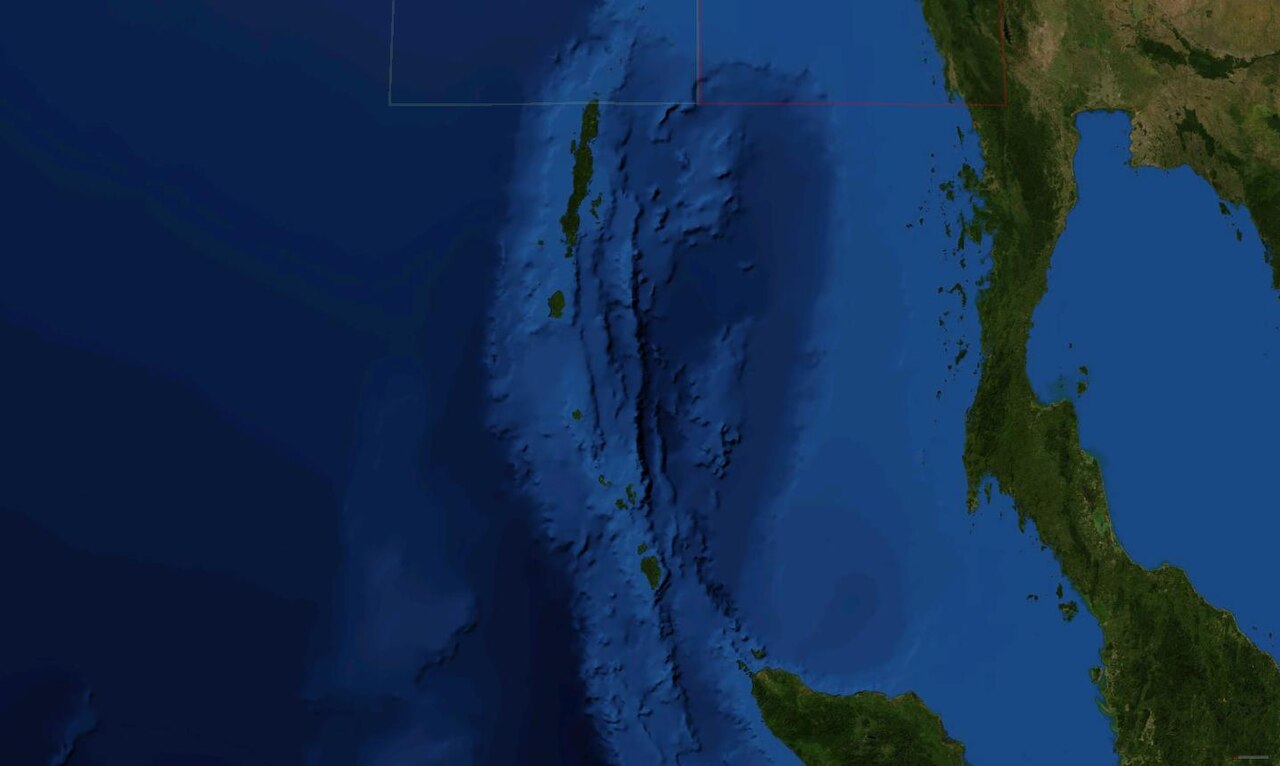
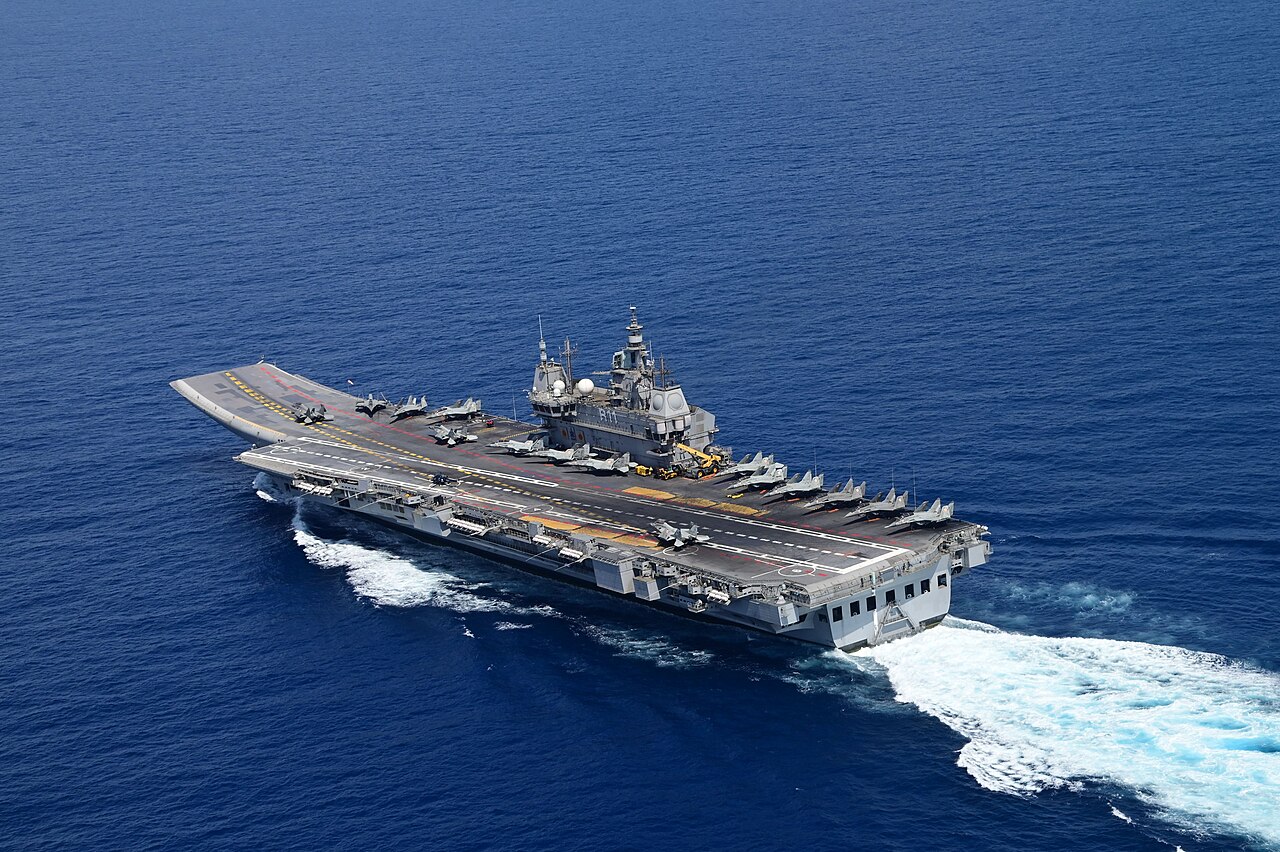
What India requires, therefore, is not allies but capabilities. The Indian Navy must be capable of contesting the Indian Ocean, of projecting force into the Andaman Sea and the Arabian Sea, of monitoring Chinese naval movements and responding to them. The Indian Army must be capable of holding the Line of Actual Control against Chinese pressure. Intelligence, cyber capabilities, space-based assets, precision strike — these are the instruments through which India must secure its own interests, because it cannot rely on others to secure them on its behalf.
India’s strategic autonomy — that phrase which has sometimes seemed like a polite fiction, a way of avoiding difficult choices — must be transformed from a diplomatic posture into a military and economic reality.
This requires defence spending at levels that Indian budgets have not historically sustained. It requires indigenous defence manufacturing that reduces dependence on foreign suppliers who may impose conditions or cut off supply in a crisis. It requires economic growth at rates that expand the tax base and fund the investment in military capability that India’s strategic position demands. And it requires a political class willing to have an honest conversation with the Indian public about the nature of the threats India faces.
The Indian Ocean will not wait. China’s arc tightens. Pakistan’s instability deepens. American reliability wavers with each election cycle. The nations that built enduring security in the modern era did so through hard-headed investment in their own capabilities, not through faith in the benevolence of others.
India stands at the centre of an ocean that will be the defining strategic theatre of the twenty-first century. The choice before her is not between dependence and isolation. It is between building the capacity to fend for herself and discovering, at the worst possible moment, that no one else will do it for her.
In geopolitics, as in life, the most important truth is often the hardest to say: India has no true friends. She has only herself. And that, in the end, may be enough — but only if she acts on it now.