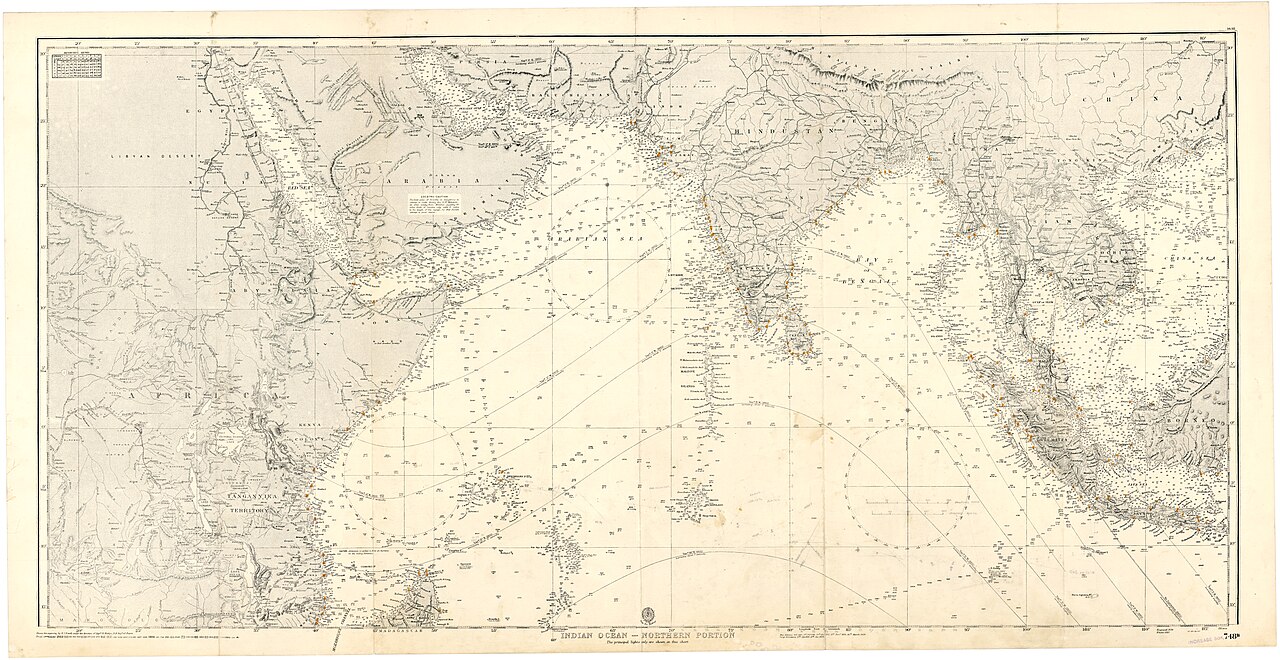
In 2004, an American defence analyst named Christopher Boggs wrote an internal paper for the United States Department of Defense that introduced a phrase which has since entered the permanent vocabulary of Indian strategic thinking. He called it the String of Pearls — a description of China’s emerging network of ports, diplomatic relationships, and military access points stretching from the South China Sea through the Strait of Malacca, across the Bay of Bengal, through the Indian Ocean, and up into the Arabian Sea and the Persian Gulf. Each pearl: a port, a base, a listening post, a diplomatic foothold. Together: a necklace drawn tight around India’s maritime neighbourhood.
The paper was intended for American planners. But its most important audience, whether Beijing intended it or not, was New Delhi. Because the String of Pearls was not a theoretical construct or a worst-case scenario document. It was a description of something that was already happening, had been happening for years, and would continue to happen with the patient, methodical consistency that characterises Chinese grand strategy at its most effective. India was being encircled. And India, absorbed in its domestic politics, its land border anxieties, and its traditional preference for looking inward, was largely not paying attention.
Two decades later, the strategic picture is considerably more developed, considerably more concerning, and — here is the cautious note of optimism this essay will try to earn — considerably better understood in New Delhi than it once was. India is responding. The response is imperfect, incomplete, and in some areas still too slow. But the direction is right, and the awakening, however late, is real.
The Logic Behind the Necklace
To understand the String of Pearls, you first have to understand the problem it is designed to solve. China’s strategic planners have long been preoccupied with what they call the Malacca Dilemma — the uncomfortable reality that approximately eighty percent of China’s oil imports pass through the Strait of Malacca, a narrow chokepoint between Malaysia and Indonesia that could, in the event of a conflict, be closed by the United States Navy in a matter of hours. For a country that has bet its entire social contract on continuous economic growth, and whose economic growth is entirely dependent on uninterrupted energy imports, this is not an abstract strategic concern. It is an existential vulnerability.
The String of Pearls is, at one level, China’s answer to the Malacca Dilemma. By establishing port access and naval facilities along the Indian Ocean littoral, China achieves several things simultaneously: it creates alternative routes for energy imports that bypass the Malacca chokepoint; it establishes the ability to project naval power into the Indian Ocean, which was previously an area of zero Chinese military presence; and it builds the diplomatic and economic relationships with littoral states that would, in a conflict scenario, complicate any American attempt to close the sea lanes.
But the String of Pearls is not only a response to American power. From an Indian perspective, its secondary function is equally significant: it constrains India. A China with port access in Pakistan, Sri Lanka, Bangladesh, and Myanmar, with a naval base in Djibouti commanding the entrance to the Red Sea, with growing influence in the Maldives and Seychelles — that China has transformed the Indian Ocean from India’s natural strategic backyard into a contested space where India must constantly negotiate its own freedom of manoeuvre. India’s strategic community calls this the two-front problem in its maritime dimension: a northern land border with China that demands constant army attention, and now a maritime perimeter that demands naval attention that India has historically not invested in.
China’s genius in the String of Pearls has been to pursue military objectives through economic instruments. Every pearl begins as a commercial port. The question of what it might become is left for later.
The Pearls, One by One
Gwadar is the most strategically significant pearl and the one most directly aimed at India. Located at the mouth of the Persian Gulf in Pakistan’s Balochistan province, Gwadar was a modest fishing village before China began developing it in 2002. It is now a deep-water port, the terminal of the China-Pakistan Economic Corridor — a sixty-two billion dollar infrastructure project connecting China’s Xinjiang province to the Arabian Sea — and increasingly a facility with the characteristics of a dual-use installation that could support Chinese naval operations. Gwadar gives China direct access to the Arabian Sea without passing through the Strait of Malacca at all, and it places Chinese infrastructure on Pakistan’s territory — a country that is itself India’s most significant security challenge. The strategic geometry of this arrangement, from India’s perspective, is not subtle.
Hambantota in Sri Lanka represents a different model but an equally instructive one. China lent Sri Lanka the money to build the port. Sri Lanka, unable to service the debt, leased the port to China on a ninety-nine-year lease in 2017. The debt trap narrative has been contested by some economists who argue that Hambantota’s debt was a small fraction of Sri Lanka’s total borrowing and that the port deal was more the result of Sri Lankan political dysfunction than Chinese predation. Both things can be true simultaneously: the debt trap mechanism may be overstated as a general theory, and the specific outcome at Hambantota — a Chinese state-owned company operating a deep-water port on the southern coast of an island that sits astride India’s most critical sea lanes — is still a strategic outcome that China would have designed if it could have.
In Myanmar, China has developed the Kyaukpyu port on the Bay of Bengal, connected by pipeline directly to Yunnan province, again bypassing Malacca. In Bangladesh, Chinese investment in Chittagong has been significant, though India worked actively to limit Chinese strategic penetration during the Hasina years, with considerable success. The Maldives has oscillated between pro-India and pro-China governments with uncomfortable regularity, and the strategic implications of Chinese infrastructure in an archipelago sitting astride India’s most critical shipping lanes have not been lost on New Delhi.
And then there is Djibouti — China’s first acknowledged overseas military base, opened in 2017 on the Horn of Africa at the entrance to the Red Sea. Djibouti is where the pretence of purely commercial intent became impossible to maintain. A commercial port does not require berthing facilities for naval vessels and logistical support for military operations. China’s Djibouti base does. It is the model that strategic analysts have always feared the other pearls might eventually become.
What India Got Wrong
Honesty requires acknowledging that India was slow. For much of the 2000s and into the early 2010s, Indian strategic thinking about China remained anchored in the land border — the Line of Actual Control, the Arunachal Pradesh dispute, the memory of 1962. The maritime dimension was understood by a small community of naval strategists and think-tank analysts but did not drive policy with the urgency the situation warranted. The Indian Navy, chronically underfunded relative to the Army, made the case for Indian Ocean primacy repeatedly and was given insufficient resources to act on it.
There was also a persistent strand of Indian foreign policy thinking, rooted in the Nehruvian tradition and in India’s genuine attachment to strategic autonomy, that resisted framing the China relationship in zero-sum terms. The BRICS engagement, the SCO membership, the carefully balanced rhetoric about a multipolar world — all of it rested on a hope that India and China could be competitors without being adversaries. Galwan in June 2020, where twenty Indian soldiers died in hand-to-hand combat with Chinese troops on Indian territory, ended that hope with a finality that could not be diplomatically softened.
Galwan was not a turning point in the sense that it created a new reality. It was a turning point in the sense that it made the existing reality impossible to ignore. China had always been a strategic challenge. After Galwan, India could no longer pretend otherwise.
The other thing India got wrong was allowing itself to be outpaced in its own neighbourhood. Sri Lanka got Chinese money when it needed infrastructure investment and India was slow with alternatives. Nepal drifted toward Beijing during periods when the India-Nepal relationship was mishandled. The Maldives has flipped orientations multiple times in a decade. India’s neighbourhood policy has improved considerably in recent years, but the window in which China could be kept out of the immediate periphery has largely closed.
India’s Counter-Move: What Is Working
The most significant and underappreciated element of India’s response is the Chabahar port in Iran. Located on Iran’s southeastern coast on the Gulf of Oman, Chabahar is India’s answer to Gwadar — a port that gives India direct access to Afghanistan and Central Asia without passing through Pakistan, and that positions Indian commercial and strategic presence on the Arabian Sea in a location that directly counters Gwadar’s reach. India signed a ten-year contract in 2024 to operate its Shahid Beheshti terminal. The United States, which has generally opposed Indian engagement with Iran, granted Chabahar a sanctions waiver — a rare acknowledgment of India’s strategic logic even when it conflicts with American Iran policy. This is one of those areas where India has correctly prioritised its own strategic interests over American preferences, and the result is a genuine asset.
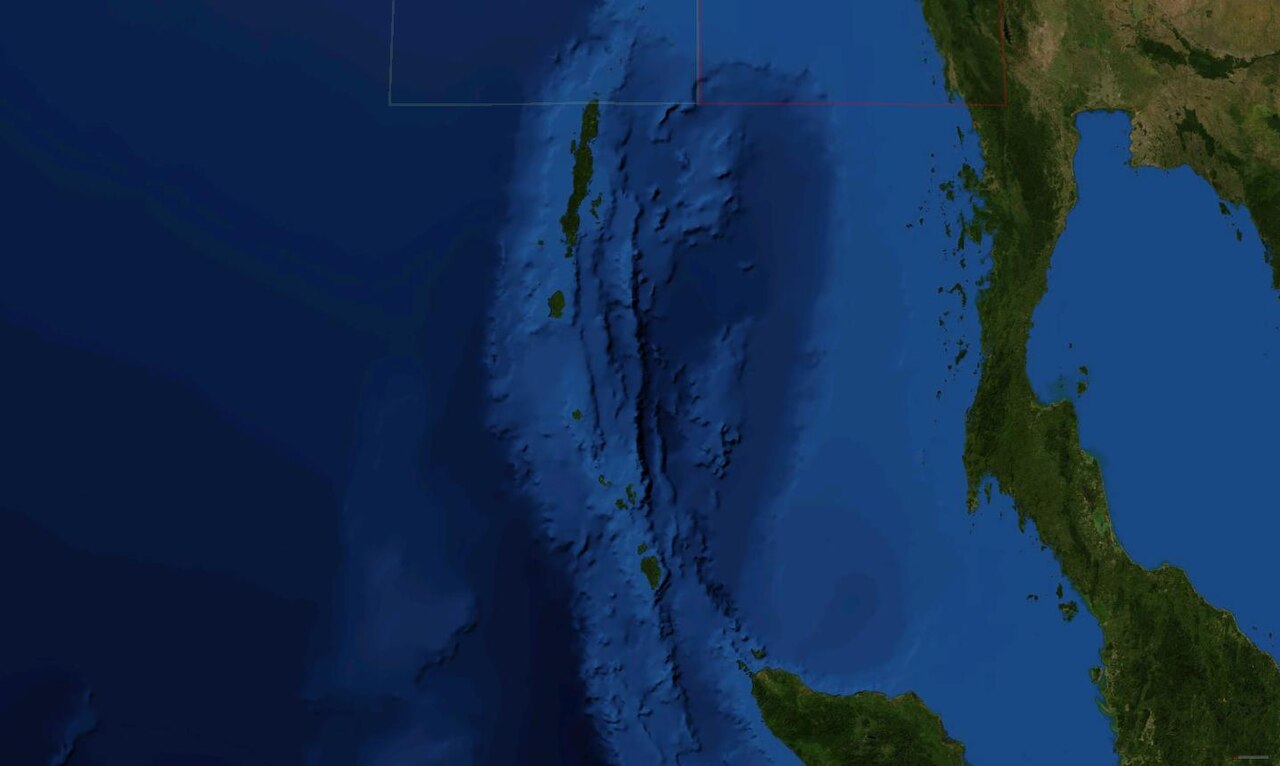
India’s island territories have received dramatically increased attention, and nothing captures the shift in strategic thinking better than the Great Nicobar Island project. Located just forty nautical miles from the mouth of the Strait of Malacca at the southern tip of the Andaman and Nicobar chain, Great Nicobar sits at what strategic analysts have taken to calling the Six Degree Channel — one of the busiest maritime straits in the world, through which roughly eighty percent of China’s crude oil imports pass. For decades it was underdeveloped, ecologically pristine, and strategically dormant. That is ending.
The Great Nicobar project, cleared by India’s National Green Tribunal in February 2026 after years of environmental dispute, carries a price tag of approximately eighty-one thousand crore rupees and is being executed in phases over thirty years. Its components are not subtle in their intent: a dual-use civilian and military airport with a three-kilometre runway capable of hosting P-8I Poseidon maritime patrol aircraft and fighter jets; a deep-water international container transhipment terminal at Galathea Bay with twenty-metre draft capable of handling the largest container vessels afloat; a township designed to accommodate three hundred and fifty thousand people; and a dense maritime domain awareness network of coastal radar, electronic intelligence, and signals intelligence stations that will give India the ability to track surface and subsurface traffic across the eastern Indian Ocean with a precision it has never previously possessed. A second airfield is already under construction at Chingen village. Naval air stations across the island chain are being upgraded to accommodate the full range of India’s maritime patrol capability.
The strategic arithmetic is straightforward. By positioning itself near the northern approaches to Malacca, India does not merely observe the chokepoint — it acquires the capacity to influence it. From Beijing’s perspective, this transforms Great Nicobar from an obscure island at the end of a chain into a structural complication of the first order. The project has real critics: environmental concerns about the destruction of one of India’s most biodiverse ecosystems are legitimate, the seismic risk of building major infrastructure on one of the world’s most active tectonic fault lines is genuine, and the impact on the indigenous Shompen community raises serious questions about how the state is balancing strategic necessity against the rights of those who have lived there for centuries. These are not trivial objections. But the strategic logic of Great Nicobar is undeniable, and India has decided, correctly in this writer’s view, that the competition taking shape in the Indian Ocean is too consequential to leave its most valuable geographic card unplayed.
The Quad — the quadrilateral security dialogue between India, the United States, Japan, and Australia — has been revived and elevated. The Quad is not a military alliance and India has been careful to ensure it remains a forum for consultation and practical cooperation rather than a commitment to collective defence. But the maritime domain awareness sharing, the coordinated naval exercises, and the supply chain resilience initiatives it has produced represent real capability enhancement. India gets intelligence, interoperability, and diplomatic weight without surrendering the strategic autonomy that remains central to its foreign policy identity.
Bilaterally, India has deepened defence cooperation with partners who have their own reasons to be concerned about Chinese maritime expansion. Japan has become a genuine strategic partner, with defence equipment transfers and joint exercises grounded in a shared concern about Chinese behaviour that gives the relationship real strategic content. France, with its own Indian Ocean territories, has similarly become a more substantive partner. The logistics exchange agreements — first with the United States, then with others — give the Indian Navy the ability to use partner facilities and vice versa, a practical capability enhancement that costs India relatively little in terms of strategic commitment.
What Is Not Working Fast Enough
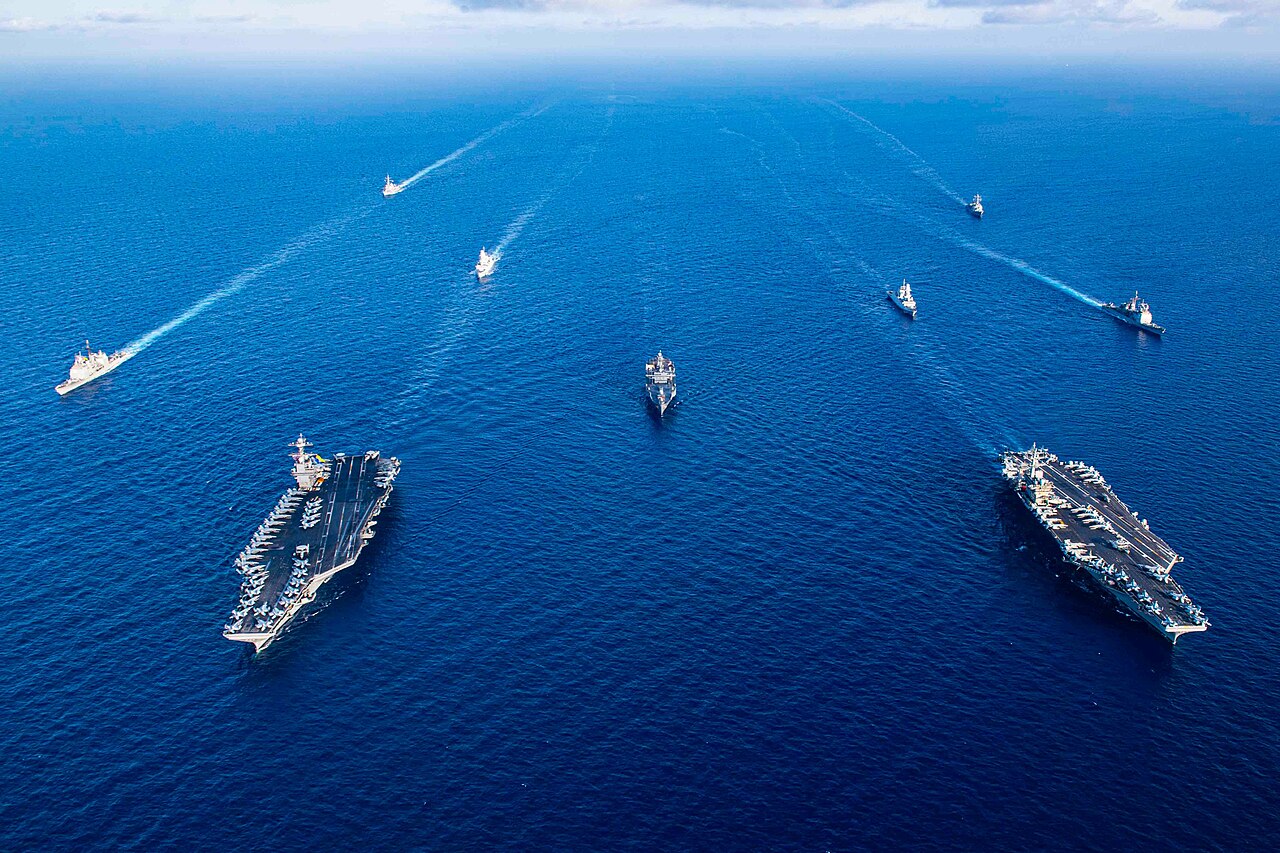
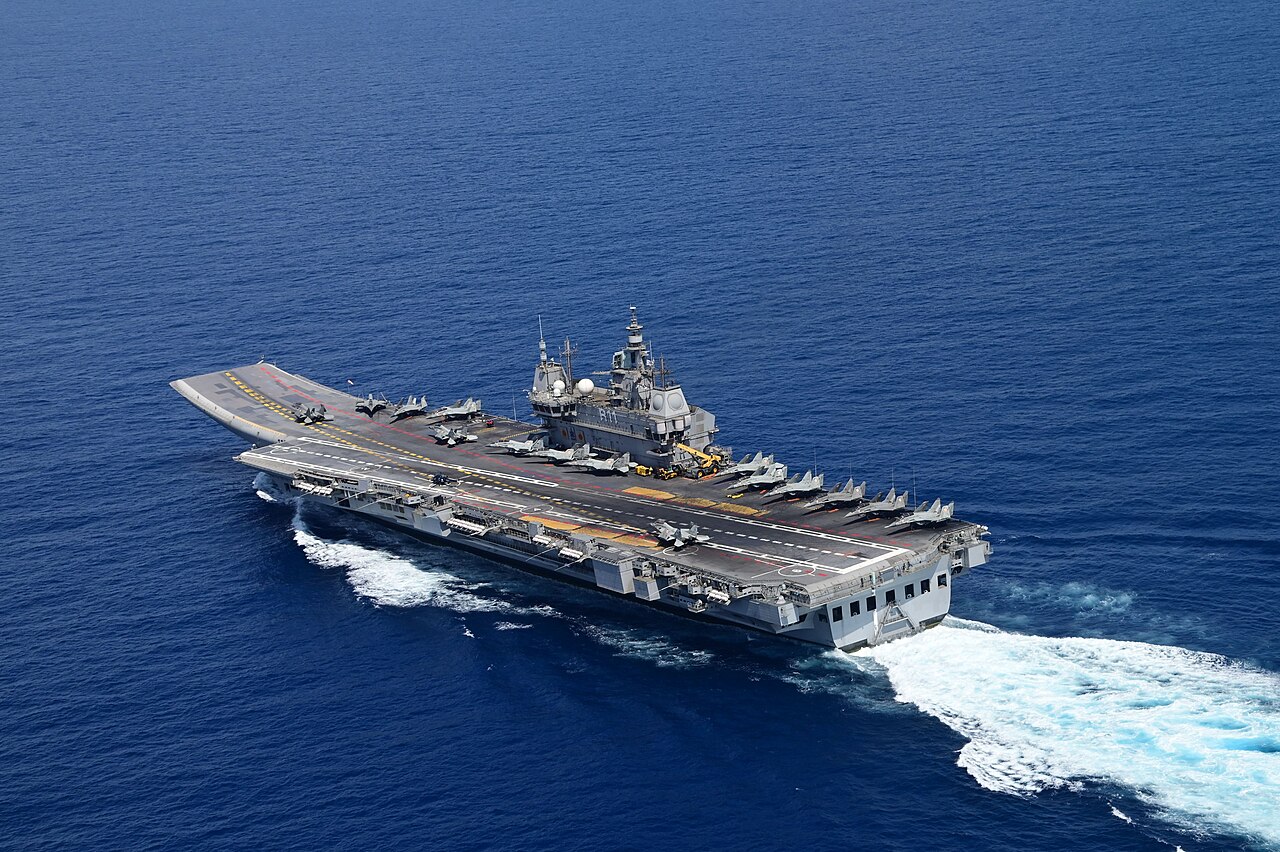
The Indian Navy remains undersized for the task it is being asked to perform. India’s coastline stretches seven thousand five hundred kilometres. Its exclusive economic zone exceeds two million square kilometres. Its strategic interests extend from the Persian Gulf to the Strait of Malacca. The Indian Navy currently operates with roughly one hundred and fifty vessels, against a People’s Liberation Army Navy that has become the world’s largest by number of ships and is adding capability at a rate India’s shipbuilding programme cannot match. INS Vikrant, India’s first domestically built aircraft carrier commissioned in 2022, is a genuine achievement and a symbol of growing indigenous capability. But one carrier does not constitute the sustained sea control capability that Indian Ocean primacy requires.
The neighbourhood picture remains mixed. Sri Lanka, economically desperate after its 2022 crisis, has been pragmatic about accepting investment from wherever it comes, and India has stepped up with credit lines and currency swap arrangements. But Chinese infrastructure in Hambantota is not going away. The Maldives elected a president in 2023 who ran explicitly on asking India to withdraw its military personnel — a request India ultimately complied with. The optics were poor even if the practical impact was limited.
Most importantly, India still does not have a comprehensive answer to China’s Belt and Road Initiative as an instrument of influence across the broader Indo-Pacific. The Quad’s infrastructure initiatives and various bilateral Indian programmes are moving in the right direction, but the sheer scale of Chinese infrastructure financing has created relationships and dependencies that take years and enormous resources to counterbalance. India, with its own significant domestic infrastructure deficit, does not have the surplus capital to compete with China across the full breadth of the BRI’s reach.
India does not need to outspend China across the entire Indo-Pacific. It needs to be present enough, and capable enough, in the waters that matter most to its own security. That is a more achievable objective — and one that India is, finally, beginning to organise itself around.
The Longer Game
There is a version of this strategic competition that India loses. It is the version where domestic political dysfunction prevents the sustained multi-decade commitment to naval investment that Indian Ocean primacy requires; where neighbourhood diplomacy continues to be reactive rather than proactive; where the economic relationship with China, still substantial despite tensions, creates lobbies that resist the strategic decoupling that security logic demands; and where India’s chronic tendency to think in electoral cycles rather than strategic decades prevents it from making the hard long-term choices that its situation requires.
There is also a version that India wins, or at least manages credibly. In this version, India leverages its genuine advantages — its democratic legitimacy, its growing economic weight, its diaspora networks across the Indian Ocean littoral, its historical relationships with the Gulf states and East Africa, its geographic position at the centre of the Indian Ocean rather than its periphery — to build a web of relationships and capabilities that make unilateral Chinese domination of the Indian Ocean simply too costly to attempt. India does not need to defeat China. It needs to raise the price of encirclement to the point where it is no longer worth paying.
The signs that India is moving in the right direction are real, even if the pace remains frustrating. Galwan shocked the Indian strategic establishment into a clarity about China that years of diplomatic engagement had obscured. The defence budget has grown steadily. The indigenous defence manufacturing programme, long a source of embarrassment against its ambitious targets, is finally producing results — the Tejas fighter, INS Vikrant, the Agni missile series. The Look East and Act East policies have deepened relationships with ASEAN states that have their own anxieties about Chinese power.
The necklace is real. The pearls are in place. China’s strategic patience in assembling them over two decades reflects a quality of long-term thinking that India would do well to emulate. But India is not without resources, not without partners, and not without the geographic and demographic fundamentals that give it a genuine claim to primacy in the waters that surround it. The encirclement is not yet complete. And India, finally awake to what has been happening, is beginning to push back with the seriousness that the situation demands.
Whether that seriousness will be sustained, deepened, and translated into the kind of generational strategic commitment that the competition with China requires — that is the question on which India’s future in the Indian Ocean will be decided. The answer is not yet written. But for the first time in a long while, the people who need to write it seem to understand what is at stake.