Offensive realism is among the most powerful theoretical frameworks in the history of international relations. Its core logic is parsimonious, rigorous, and brutally explanatory: states exist in an anarchic international system, they can never be certain of each other's intentions, and the surest guarantee of survival is the maximisation of power relative to rivals. Great powers therefore pursue regional hegemony — the domination of their own neighbourhood — and, having achieved it, seek to prevent any other state from doing the same elsewhere. The United States, the argument goes, became a regional hegemon in the Western Hemisphere and has spent the better part of two centuries ensuring that no other power replicates that achievement in Europe or Asia.
This framework, developed with exceptional rigour by John Mearsheimer in The Tragedy of Great Power Politics, remains indispensable for understanding why states behave as they do — why rising powers expand, why established powers balance against them, why peace between great powers is always provisional and never guaranteed. These insights are not diminished by what follows.
What follows is a challenge not to the logic of offensive realism but to the geography it assumes. Mearsheimer's theory identifies a specific set of geopolitically important regions — Europe, the Middle East, Northeast Asia, and the Western Hemisphere — and it is within and between these regions that the theory's drama plays out. Outside these regions, the theory offers relatively little. Vast portions of the earth's surface — South Asia, Sub-Saharan Africa, most of Latin America — appear at the margins of the framework if they appear at all.
The argument of this article is that this geographical limitation is not a necessary feature of offensive realism's logic. It is a contingent historical judgment — one shaped by the geopolitical realities of the twentieth century during which the theory was developed — that the theory's own internal principles do not require and that the twenty-first century's emerging power distribution actively undermines. A truly global theory of great power competition needs a more complete map.
What the Theory Actually Says About Regions
Before extending the map, it is worth being precise about why Mearsheimer draws it where he does. His identification of geopolitically important regions is not arbitrary — it rests on a theoretical argument about the conditions under which great powers can project force and therefore threaten one another.
The key concept is what Mearsheimer calls the stopping power of water. Large bodies of water, he argues, are profoundly effective at stopping the projection of land power. Armies cannot simply cross oceans the way they can cross land borders. The logistical challenge of amphibious operations — the equipment, the supply lines, the vulnerability to interdiction — means that even the most powerful state cannot easily translate its land-based military dominance into dominance across oceanic distances. The world's oceans therefore act as natural barriers that divide the international system into distinct regional theatres, each with its own internal power dynamics.
From this premise, Mearsheimer derives his regional map. Europe, Northeast Asia, and the Middle East emerge as the most consequential regions because they are the areas where the greatest concentrations of population and wealth have historically been located, and where great powers have therefore competed most intensely for regional dominance. The Western Hemisphere is the region of American hegemony — already achieved, the baseline from which American foreign policy operates.
This is a coherent argument. But notice what it actually establishes. It establishes that oceans create regional separations. It establishes that regions are defined by proximity, by the ability of states to project power against one another over land. And it establishes that geopolitically important regions are those that contain significant concentrations of population and wealth — because population and wealth generate military capability, and military capability is what great power competition is ultimately about.
None of these premises logically excludes South Asia. They are simply applied, in Mearsheimer's work, to a map that was drawn from the vantage point of twentieth century geopolitical history rather than derived purely from the theory's first principles. The question is what happens when you apply those principles more consistently.
The Case for South Asia as a Distinct Geopolitical Region
Apply Mearsheimer's own criteria to South Asia and the result is unambiguous: this is a geopolitically significant region that his framework has no principled basis for excluding.
Consider the population and wealth criteria first. South Asia is home to approximately two billion people — roughly a quarter of the world's population. India alone, with 1.4 billion people, is the world's most populous state. Its economy, currently the fifth largest in the world by nominal GDP, is projected by most credible forecasts to become the third largest within the next decade and the second largest by the middle of this century. The wealth and population that Mearsheimer identifies as the raw material of great power capability exist in South Asia in extraordinary abundance.
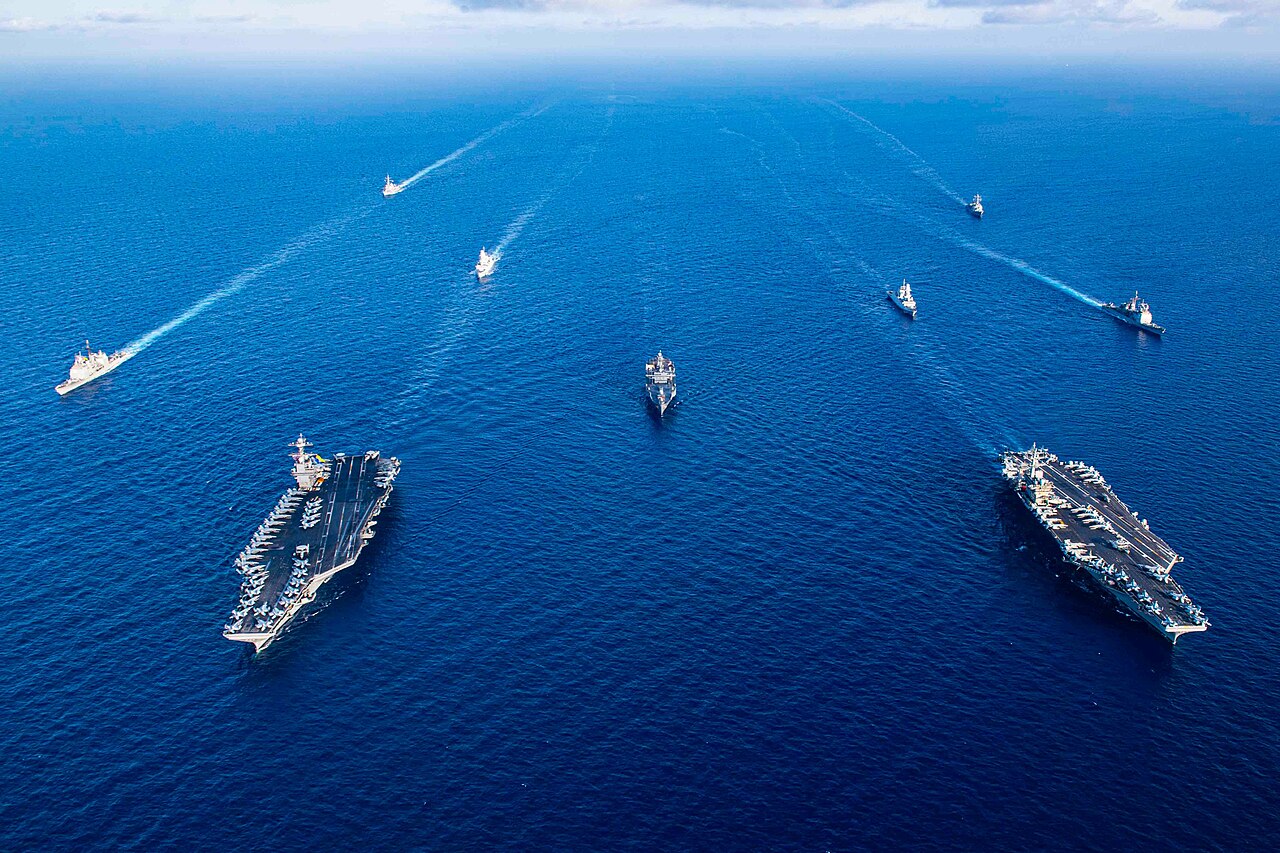
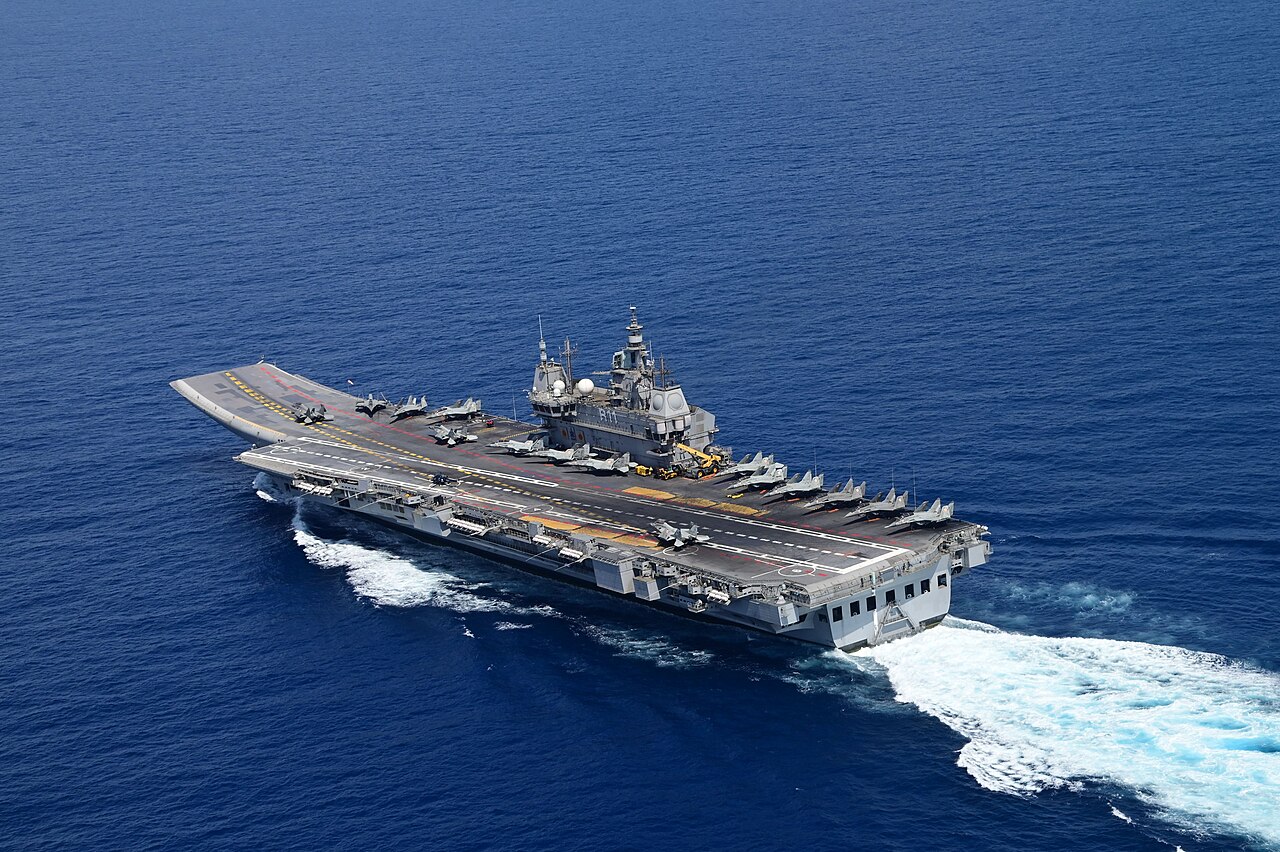
Consider the military capability that this population and wealth has generated. India fields the world's fourth largest active military by personnel. It maintains a nuclear arsenal of approximately 170 warheads with credible second-strike capability. Its navy operates two aircraft carriers, a fleet of nuclear-powered submarines, and is actively developing the capacity to project power across the Indian Ocean. India's defence budget, already among the world's largest, is growing at a rate that reflects both its economic trajectory and its strategic ambitions. By Mearsheimer's own metrics — population, wealth, military capability — India is already a great power by any reasonable definition, and the trend lines point unambiguously upward.
Consider the geography. The stopping power of water, which Mearsheimer uses to define regional separation, actually argues for the distinctiveness of South Asia rather than against it. The subcontinent is bounded to the north by the Himalayas — the world's most formidable natural land barrier, which has historically limited large-scale military movement between South and Central Asia. To the west, the arid expanse of Baluchistan and the Hindu Kush create significant barriers to westward power projection. To the east, the jungles and mountains of the Indo-Burman range have historically limited interaction with Southeast Asia. And to the south, the Indian Ocean — by Mearsheimer's own logic, a region-separating body of water — creates a maritime boundary that distinguishes South Asia from East Africa and the Arabian Peninsula.
"South Asia is not merely adjacent to geopolitically important regions. It is itself a geopolitically important region — one that the theory's own criteria identify as such and that its geography consistently delineates."
South Asia is not merely adjacent to geopolitically important regions. It is itself a geopolitically important region — one that the theory's own criteria identify as such and that its geography consistently delineates. The reason it does not appear on Mearsheimer's map is not that it fails the theoretical test. It is that Mearsheimer's map was drawn from the vantage point of Cold War geopolitical competition, in which South Asia was a secondary theatre — important, but not the arena where the great power contest was being decided. In the twenty-first century, that judgment needs revision.
India as a Candidate for Regional Hegemony
If South Asia is a distinct geopolitical region by offensive realism's own criteria, then the theory's concept of regional hegemony becomes applicable to it — and India becomes, by far, the most plausible candidate for that status.
Regional hegemony, in Mearsheimer's framework, means domination of one's neighbourhood to the point where no other state in the region can seriously threaten the hegemon's survival. The United States achieved this in the Western Hemisphere in the late nineteenth and early twentieth centuries — first by expelling European powers from the Americas, then by ensuring that no rival rose within the hemisphere to challenge American primacy. The resulting freedom from regional threats allowed the United States to project power globally and to concern itself primarily with preventing hegemony elsewhere.
India's position in South Asia has analogies to the American position in the Western Hemisphere at an earlier stage of development, though with important differences. India accounts for approximately 75 percent of South Asia's total GDP and a comparable proportion of its military capability. Its neighbours — Pakistan, Bangladesh, Sri Lanka, Nepal, Bhutan — are, with the important exception of Pakistan, not in the same strategic weight class. Pakistan, with its nuclear arsenal and historical American backing, has historically been the primary check on Indian regional dominance. But Pakistan's economic trajectory — marked by serial crises, IMF dependency, and chronic institutional dysfunction — has diverged sharply from India's over the past two decades, and the structural gap is widening.
The significant complication, within the offensive realist framework, is China. Mearsheimer would likely argue that China's presence in Asia means that South Asia cannot be treated as a separate regional theatre in isolation — that Indian strategic calculations are necessarily entangled with the broader Asia-Pacific balance in which China is the dominant rising power. This is a legitimate theoretical point. But it cuts both ways. China's interest in projecting influence into South Asia — through its relationships with Pakistan, its investments in Sri Lanka and Bangladesh, its strategic presence in the Indian Ocean — is precisely the kind of great power behaviour that offensive realism predicts. And India's response — its accelerating defence modernisation, its Quad participation, its growing naval presence in the Indian Ocean — is precisely the kind of balancing behaviour the theory expects from a power that perceives a growing threat.
The India-China dynamic, in other words, is not evidence that South Asia is not a distinct geopolitical region. It is evidence that South Asia has become the arena in which the next phase of great power competition is being contested — and that the theoretical framework needs to accommodate this new arena rather than treating it as an appendage of East Asian geopolitics.
The Indian Ocean as a Regional Definer
The geography of the Indian Ocean deserves particular attention in this context, because it illustrates both why South Asia qualifies as a distinct geopolitical region and why the stopping power of water argument actually supports including it in any serious global geopolitical map.
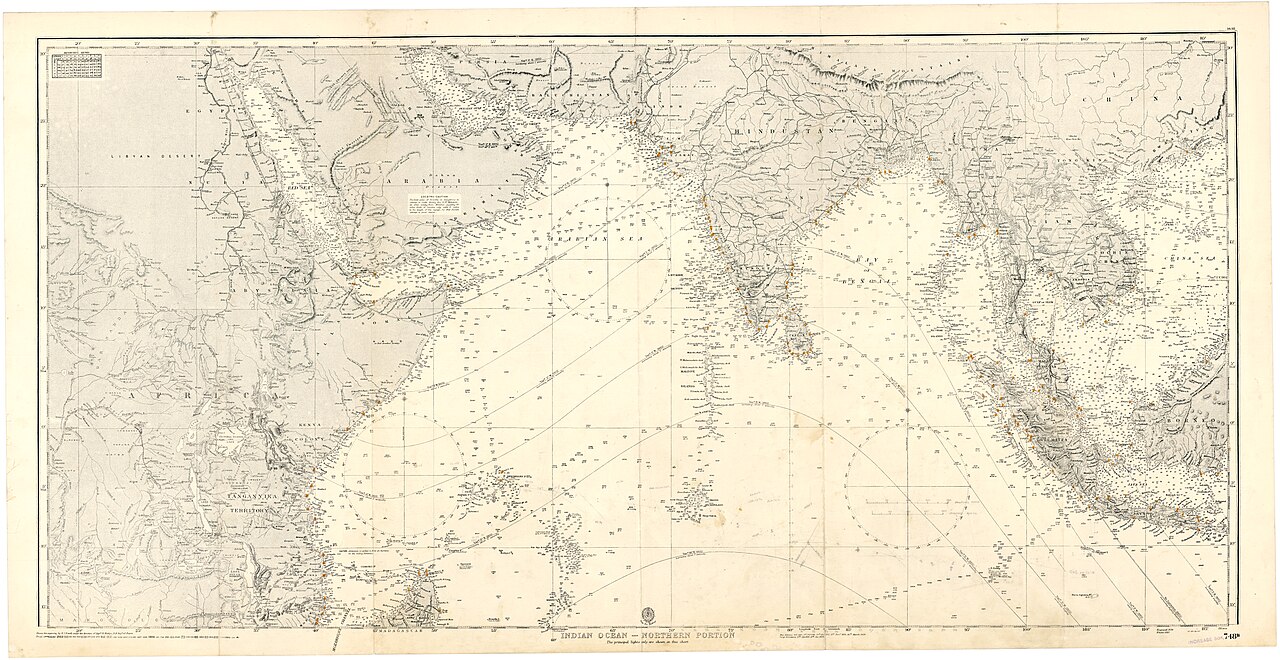
The Indian Ocean is the world's third largest ocean, connecting South Asia to East Africa, the Arabian Peninsula, Southeast Asia, and Australia. It carries approximately 80 percent of the world's seaborne oil trade. Its chokepoints — the Strait of Hormuz, the Strait of Malacca, the Bab-el-Mandeb — are among the most strategically consequential geographic features on earth. And it is an ocean in which India occupies a position of geographical centrality that no other power can replicate.
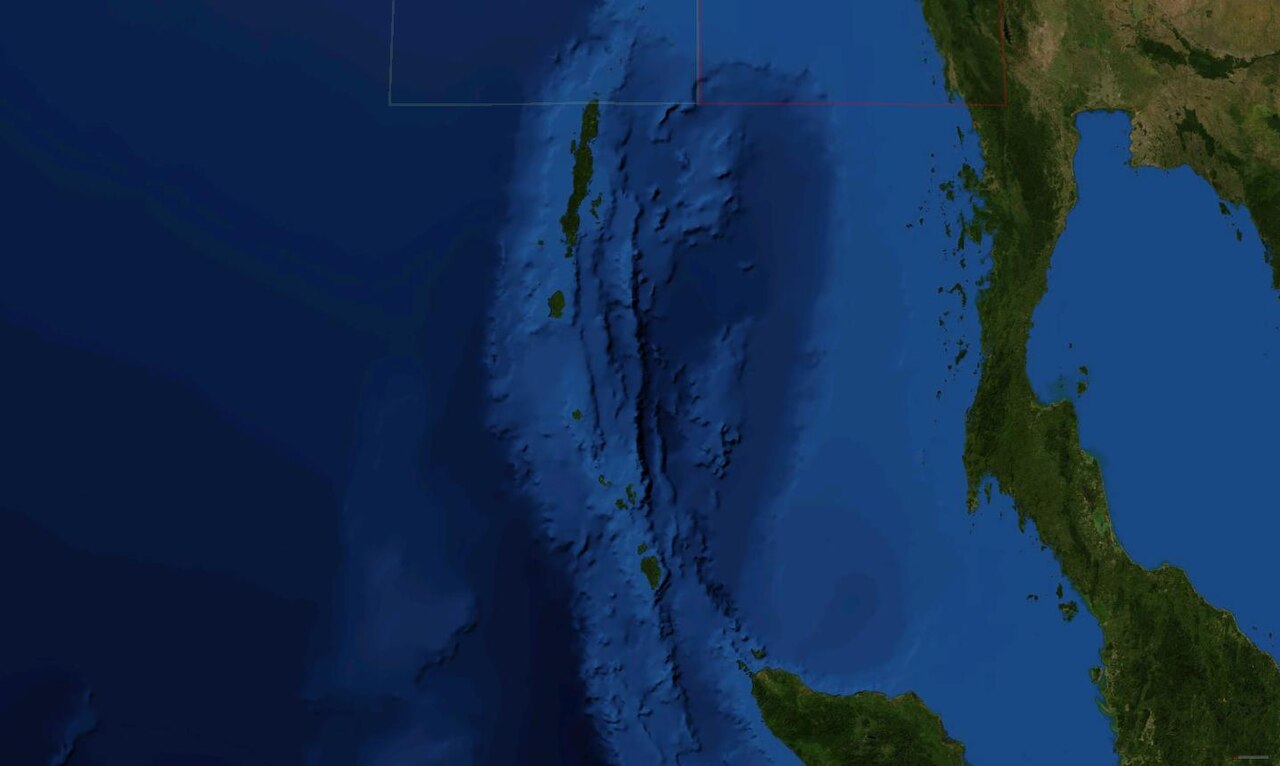
India's coastline of over 7,500 kilometres flanks the Indian Ocean on three sides. The Andaman and Nicobar Islands sit astride the sea lanes connecting the Indian Ocean to the Pacific. India's growing naval capability is explicitly oriented toward establishing what its strategic community calls a "blue water" presence — the ability to operate freely throughout the Indian Ocean and to deny that freedom to rivals. This is, in Mearsheimer's terms, the behaviour of a power seeking regional dominance — seeking to control the maritime geography of its neighbourhood the way the United States sought to control the Western Hemisphere.
If the stopping power of water creates regional separations, then the Indian Ocean creates one — and the power that sits at the centre of that ocean, with the population, wealth, and military capability to contest it, is the logical candidate for regional dominance within it. Mearsheimer's theoretical framework, applied to the Indian Ocean littoral, generates precisely the prediction that his regional map omits: that India is a candidate for a form of regional hegemony that extends beyond the South Asian subcontinent into the broader Indian Ocean space.
A Note on Sub-Saharan Africa and Latin America
The argument for updating offensive realism's regional map extends, with less force but genuine relevance, to two other areas that the framework largely marginalises: Sub-Saharan Africa and Latin America beyond the United States' immediate neighbourhood.
Sub-Saharan Africa presents a different kind of challenge to the framework. No single state in the region currently possesses the population-wealth-military combination that would qualify it as a great power candidate under Mearsheimer's criteria. Nigeria, the most populous state on the continent, has significant population but an economy marked by resource dependency and institutional fragility. South Africa, the most economically sophisticated, has a relatively small population and a declining industrial base. Ethiopia is the fastest growing large economy on the continent but remains far from the threshold of great power capability.
Yet Sub-Saharan Africa contains approximately 1.4 billion people today — a number projected to double by 2050 — and sits atop some of the world's largest reserves of the critical minerals that the twenty-first century's technology economy requires. The long-term trajectory of the region, across the half-century time horizon that serious strategic thinking should encompass, may well produce the population-wealth combination that generates great power candidates. A theoretical framework that has nothing to say about a region containing 17 percent of humanity and heading toward 26 percent is a framework whose silence will become increasingly awkward.
Latin America presents a variation on the South Asian argument. Brazil, with 215 million people and the world's twelfth largest economy, has long been identified as a potential great power whose potential has not been converted into strategic weight. Brazil's nuclear programme, its ambitions in space and defence technology, and its economic scale already place it in a different category from most regional powers. Like India, Brazil exists in a region — South America — that Mearsheimer's framework acknowledges (as part of the Western Hemisphere the United States already dominates) but does not treat as a distinct theatre of great power competition. A more complete map would need to address whether the United States' hemispheric hegemony is as complete as the theory assumes, and whether Brazil's long-term trajectory might generate the kind of regional challenger that the theory predicts but the map currently excludes.
Why the Map Was Drawn Where It Was
The geographical limitations of offensive realism are worth understanding rather than simply criticising, because understanding them clarifies what kind of revision is needed.
Mearsheimer's framework was developed from a deep immersion in the history of great power competition from the Napoleonic era through the Cold War. In that period — roughly 1800 to 1990 — the great power competition was overwhelmingly a European affair in origin, an Atlantic affair in its most consequential phases, and an Asia-Pacific affair in its final Cold War chapters. South Asia, Sub-Saharan Africa, and most of Latin America were not the arenas where the decisive contests of great power competition were fought. They were, for the most part, the objects of great power competition — colonised, contested, and manipulated by powers whose centres of gravity lay elsewhere.
The theoretical framework that emerged from studying this history naturally reflects the geography of that history. The regions that Mearsheimer identifies as geopolitically important are the regions that were geopolitically important during the period from which the theory was built. This is not a criticism — all theories are built from data, and the data of nineteenth and twentieth century great power competition does not include India as a great power, does not include Sub-Saharan Africa as a theatre of peer competition, and treats Latin America primarily as the object of American hegemonic management rather than as an arena of independent great power competition.
But a theory built from twentieth century data that is applied as if it were a timeless description of geopolitical reality will generate predictions that become increasingly inaccurate as the twenty-first century's power distribution diverges from the twentieth century's. The revision required is not a rejection of offensive realism's core logic — which remains as powerful as ever — but an updating of the empirical assumptions embedded in its geographical framework.
Toward a More Complete Map
What would offensive realism look like with its geography updated for the twenty-first century?
The core theoretical commitments remain unchanged: anarchy, uncertainty about intentions, the primacy of survival, the incentive to maximise relative power, the logic of regional hegemony as the optimal strategic objective. These are not historically contingent claims. They are structural claims about the nature of the international system that are as valid today as they were in Mearsheimer's original formulation.
What changes is the identification of geopolitically relevant regions. A twenty-first century offensive realist map would need to include, at minimum, South Asia as a distinct geopolitical region — bounded by the Himalayas to the north, the Indian Ocean to the south, and with India as the dominant power whose trajectory toward regional hegemony is precisely the kind of development that the theory predicts and that rivals will attempt to prevent. China's sustained investment in Pakistani infrastructure, its naval presence in the Indian Ocean, its relationships with Sri Lanka and Bangladesh — all of this is consistent with the theory's prediction of how an established regional power (China, in Northeast Asia) would behave toward a rising power (India) that threatens to achieve dominance in an adjacent region.
It would need to treat the Indian Ocean not merely as a body of water separating existing regions but as a distinct strategic arena — one whose control will be one of the defining contests of twenty-first century great power competition, and whose geography makes India the most plausible aspirant to dominance within it.
It would need to hold open the question of Sub-Saharan Africa — not as a current theatre of peer great power competition but as a region whose demographic and resource trajectory may generate, within the theory's own time horizon, the kind of power concentrations that the theory predicts will produce great power candidates and great power competition.
And it would need to revisit the assumption that Latin America is simply a stable region of American hegemonic dominance — asking whether Brazil's long-term trajectory might generate the kind of regional challenger that offensive realism would predict and that the United States would, by the theory's logic, be compelled to balance against.
The Map Is Not the Territory
There is a broader methodological point embedded in this argument that deserves to be stated directly.
The most powerful theories in social science are built from historical data. They identify patterns, derive structural explanations, and generate predictions. But the patterns they identify are patterns in the data they were built from — and as the world changes, the data changes, and theories that do not update their empirical assumptions generate predictions that become systematically wrong in predictable ways.
Offensive realism's core logic — that great powers compete for survival in an anarchic system and that regional hegemony is the optimal strategic objective — is not a historical claim. It is a structural claim about the nature of the international system that does not change with changing historical conditions. But the identification of which states are great powers, which regions are geopolitically important, and which power transitions are likely to produce great power competition — these are empirical claims that must be continuously updated as the world changes.
India's rise is not a footnote to the great power competition of the twenty-first century. It is one of its central chapters. A civilisation of 1.4 billion people with a nuclear arsenal, a blue water navy, the world's fastest-growing major economy, and a geography that places it at the centre of the world's most strategically important ocean is not a regional power whose regional aspirations can be safely ignored by a theory of great power competition. It is precisely the kind of rising power that offensive realism was built to explain.
The theory has the tools. It needs the map to match the territory.
Mearsheimer's offensive realism is not wrong. It is incomplete. And completing it — extending its geographical vision to accommodate the full complexity of twenty-first century power distribution — is not a critique of the tradition. It is its continuation.
Footnotes and Further Reading
1 John J. Mearsheimer, The Tragedy of Great Power Politics (W. W. Norton, 2001; updated edition 2014). The foundational text of offensive realism, from which the regional framework and the stopping power of water argument are drawn.
2 John J. Mearsheimer, The Great Delusion: Liberal Dreams and International Realities (Yale University Press, 2018). Mearsheimer's extension of offensive realist logic to the post-Cold War period, with particular attention to the China challenge.
3 C. Raja Mohan, Samudra Manthan: Sino-Indian Rivalry in the Indo-Pacific (Carnegie Endowment for International Peace, 2012). The definitive analysis of the India-China competition in the Indian Ocean, essential context for the argument about South Asia as a distinct geopolitical region.
4 Robert D. Kaplan, Monsoon: The Indian Ocean and the Future of American Power (Random House, 2010). A compelling argument for the Indian Ocean as a distinct strategic arena and India's centrality within it.
5 Ashley J. Tellis, "India as a Leading Power," Carnegie Endowment for International Peace, April 2016. A rigorous assessment of India's power trajectory and its implications for the Asian balance.
6 Shivshankar Menon, Choices: Inside the Making of India's Foreign Policy (Brookings Institution Press, 2016). A former Indian National Security Advisor's account of Indian strategic thinking — essential for understanding how India's leadership conceptualises its own regional ambitions.
7 Kenneth N. Waltz, Theory of International Politics (Addison-Wesley, 1979). Mearsheimer's predecessor in structural realism, whose systemic approach provides the theoretical foundation from which offensive realism departs and to which the argument about updating regional maps is also relevant.